Category: Stormwater Projects

Harriton Preserve Restoration

The Conservancy is working with the Friends of Harriton Preserve (FHP) and Lower Merion Township (LMT) to expand and restore habitat at Harriton Preserve. The project is funded by a Growing Greener Plus grant from the PA Department of Environmental Protection. Harriton Preserve is an 8.9-acre parcel within Harriton Park in Bryn Mawr. The Preserve contains woodlands and two streams, including a section of Mill Creek. The Harriton Association maintains the buildings, the upper section of Harriton Park, and the space along the driveway while LMT works with the FHP to maintain the 8.9-acre Preserve. Invasive plants like porcelain berry, multiflora rose, and Japanese knotweed occupy large, spreading sections of the Preserve. Most local pollinators cannot eat porcelain berry, multiflora rose, or Japanese knotweed, so the populations of pollinators – and other important organisms – at the Preserve are lower than they could be.

We are cutting the porcelain berry, Japanese knotweed, and multiflora rose plants growing near the stream near the stream for two growing seasons to counter their spread. Goats from Amazing Grazing ate some of thickest patches of invasives to start the process. The Growing Network has cut down other areas near the stream. They use a machine that can destroy tough plants while maintaining enough maneuverability to avoid native plants growing in the space. The Growing Network returned in September to knock the invasives back again. 

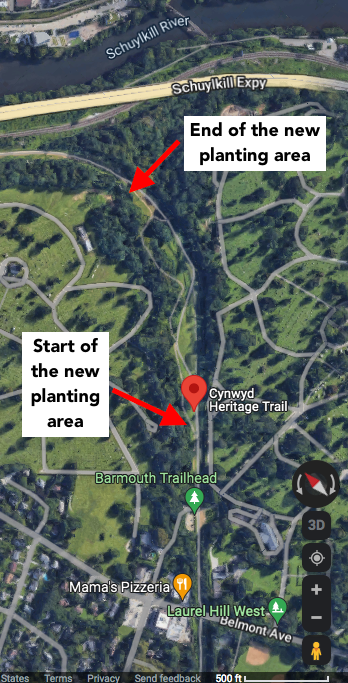
The cuttings will weaken the plants, creating room to plant new native plants, like the successful efforts at the Cynwyd Heritage Trail. After two growing seasons of cutting, we will replant the area with native plants to restore the woodlands and expand the riparian buffer.

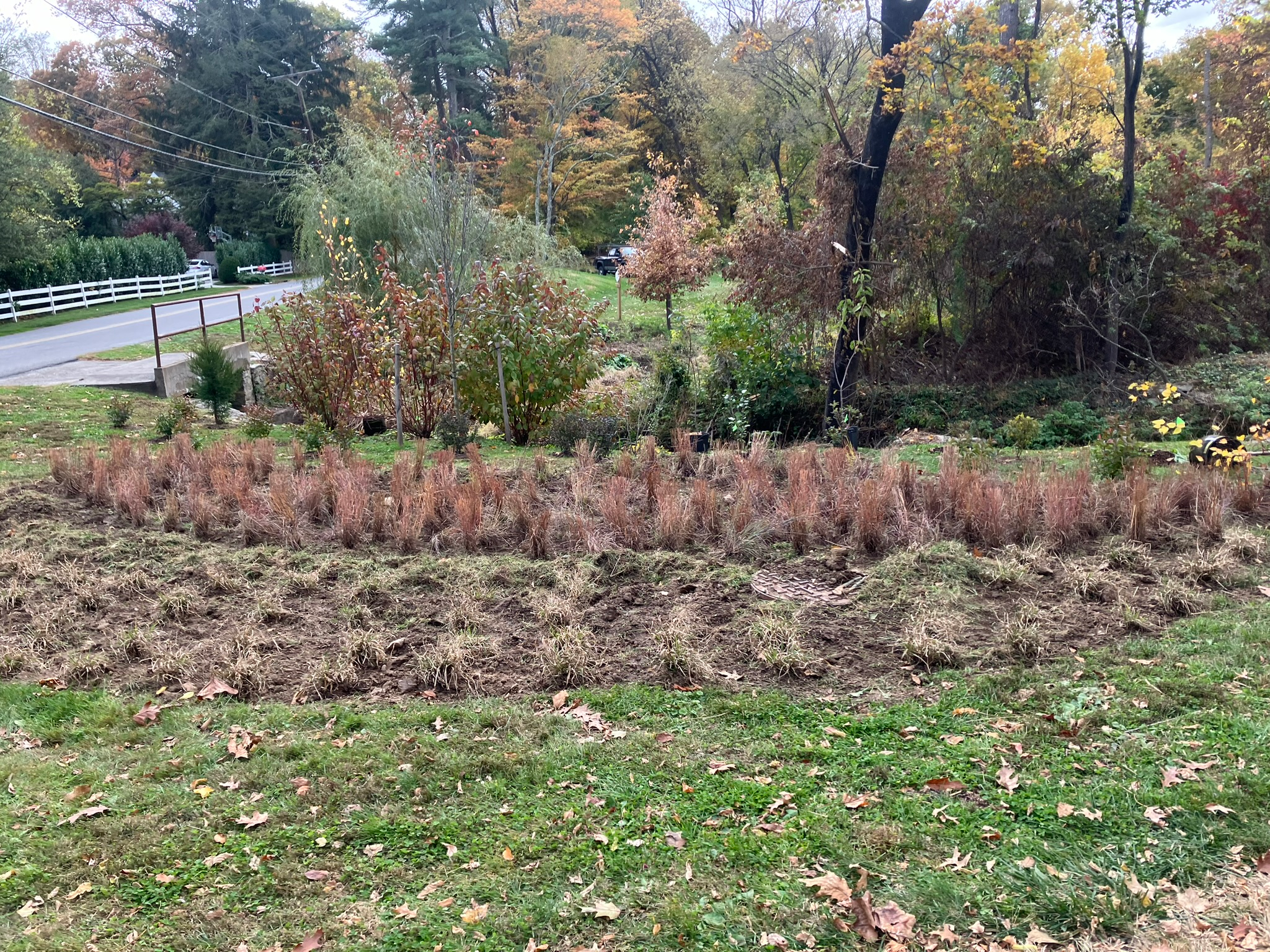
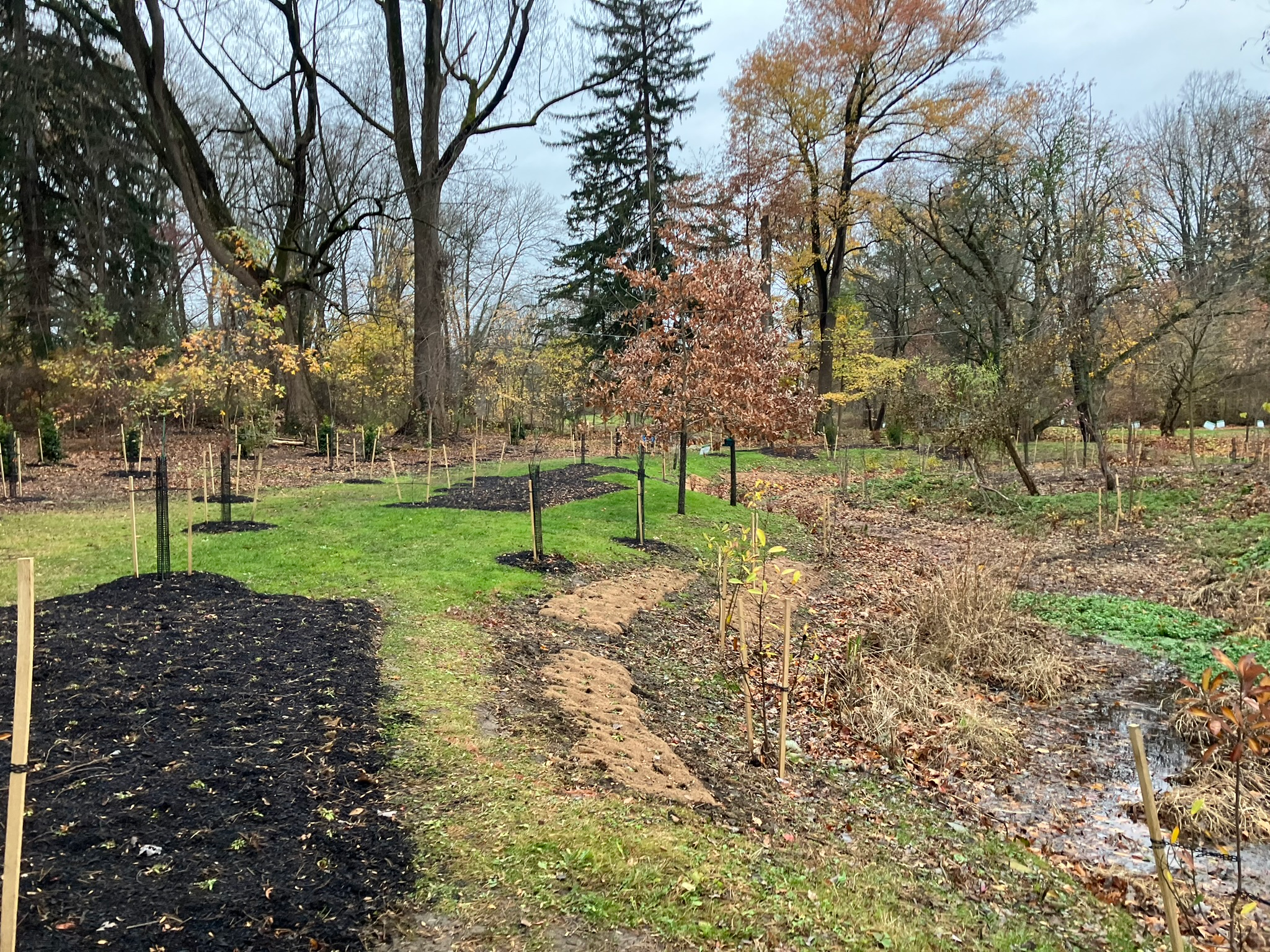
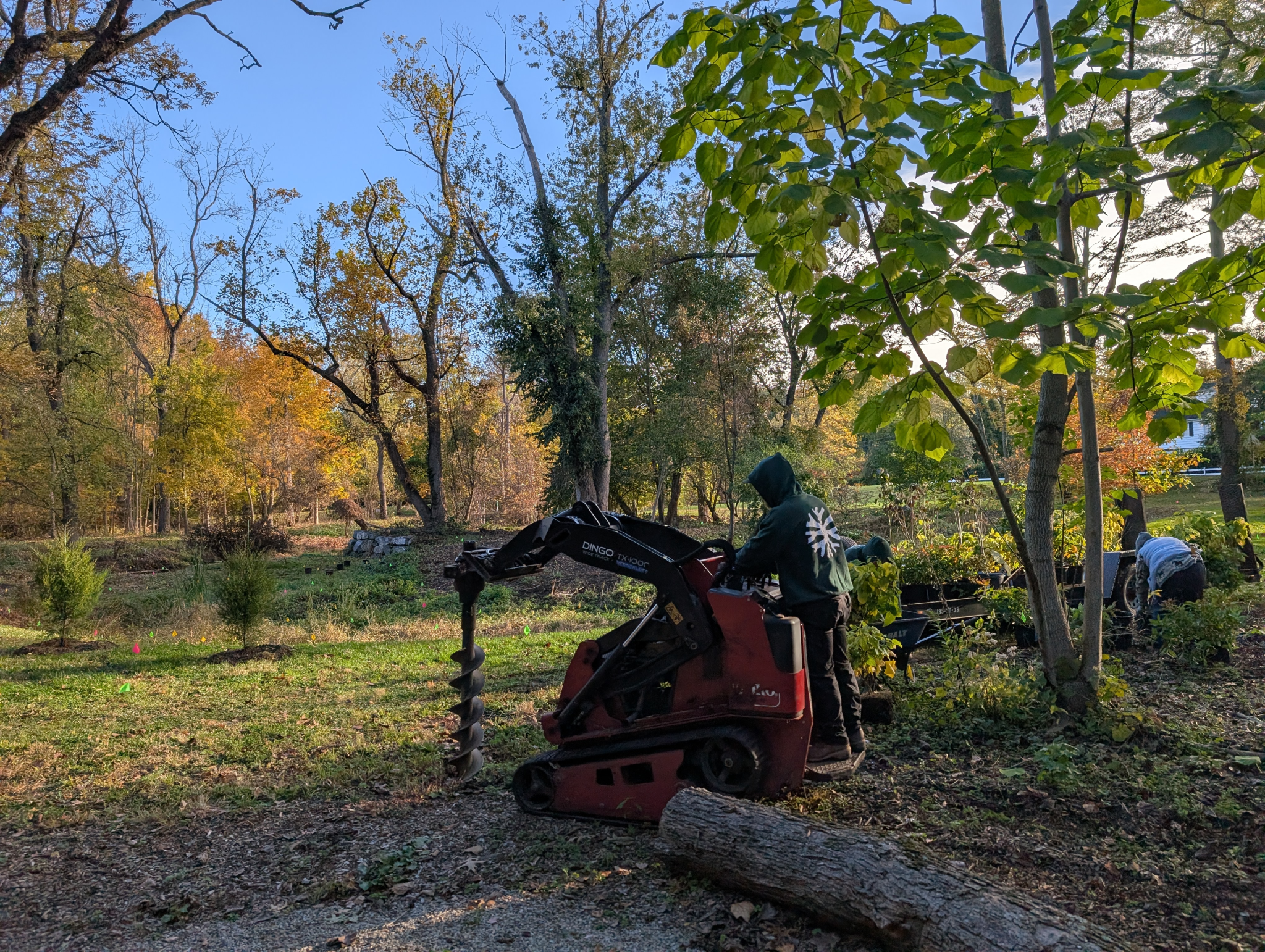
The south side of the stream, where invasive plants have been weakened already, was planted in October. Gray Landscape Design, LLC created the planting plan and guided the implementation. The plan emphasizes native trees and shrubs, to compete with and eventually shade out the invasive plants. There are a few clusters of hardy perennials intermixed, planted in coir matting to create an advantage.

 

Thank you to Jonathan DeLone from DeLone Design for providing drone videos and photos to help us track the project over time. The videos were taken while the goats were eating their way through the weeds. Click on the Delone Design logo to see visit his website and learn about his work. 



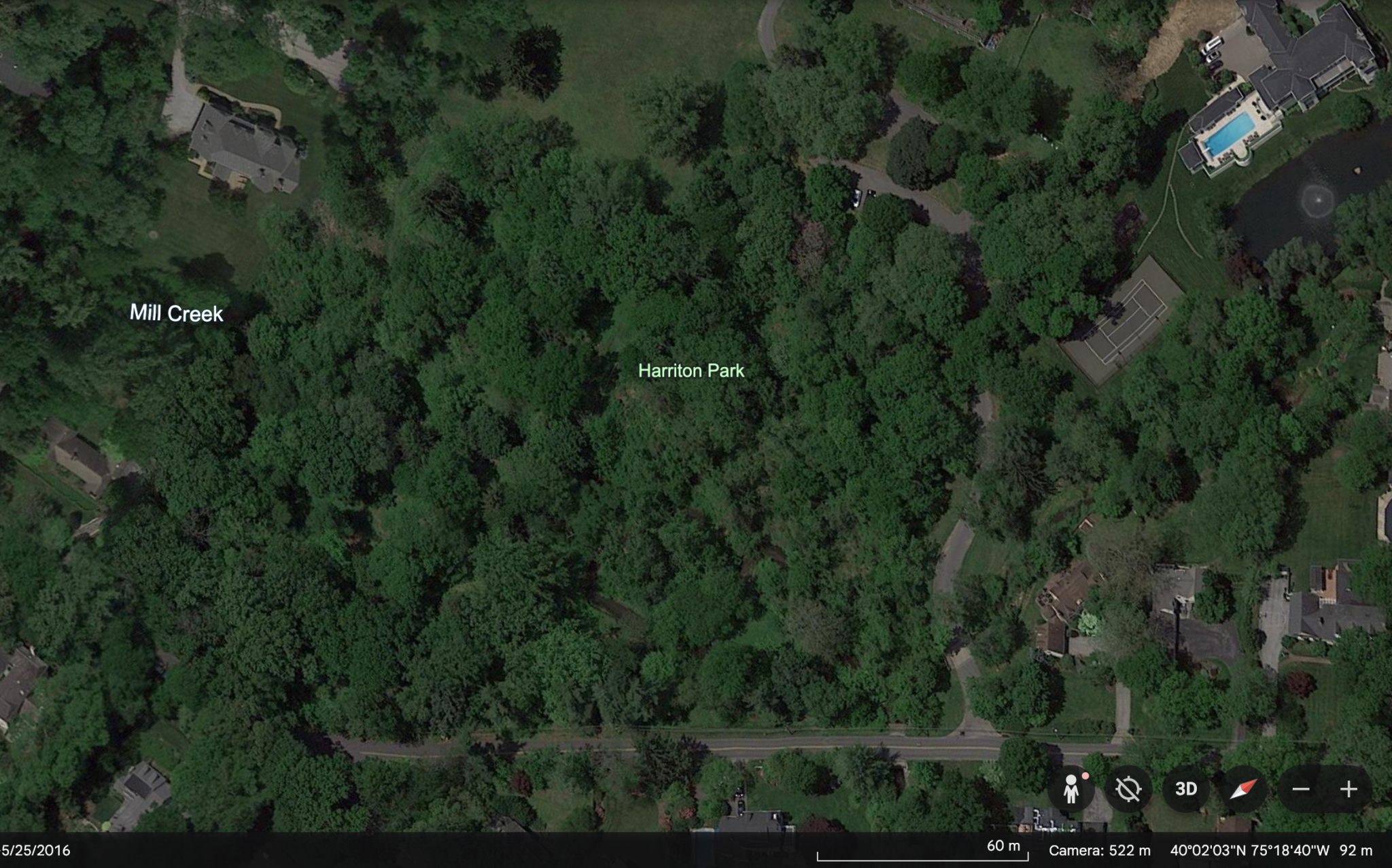
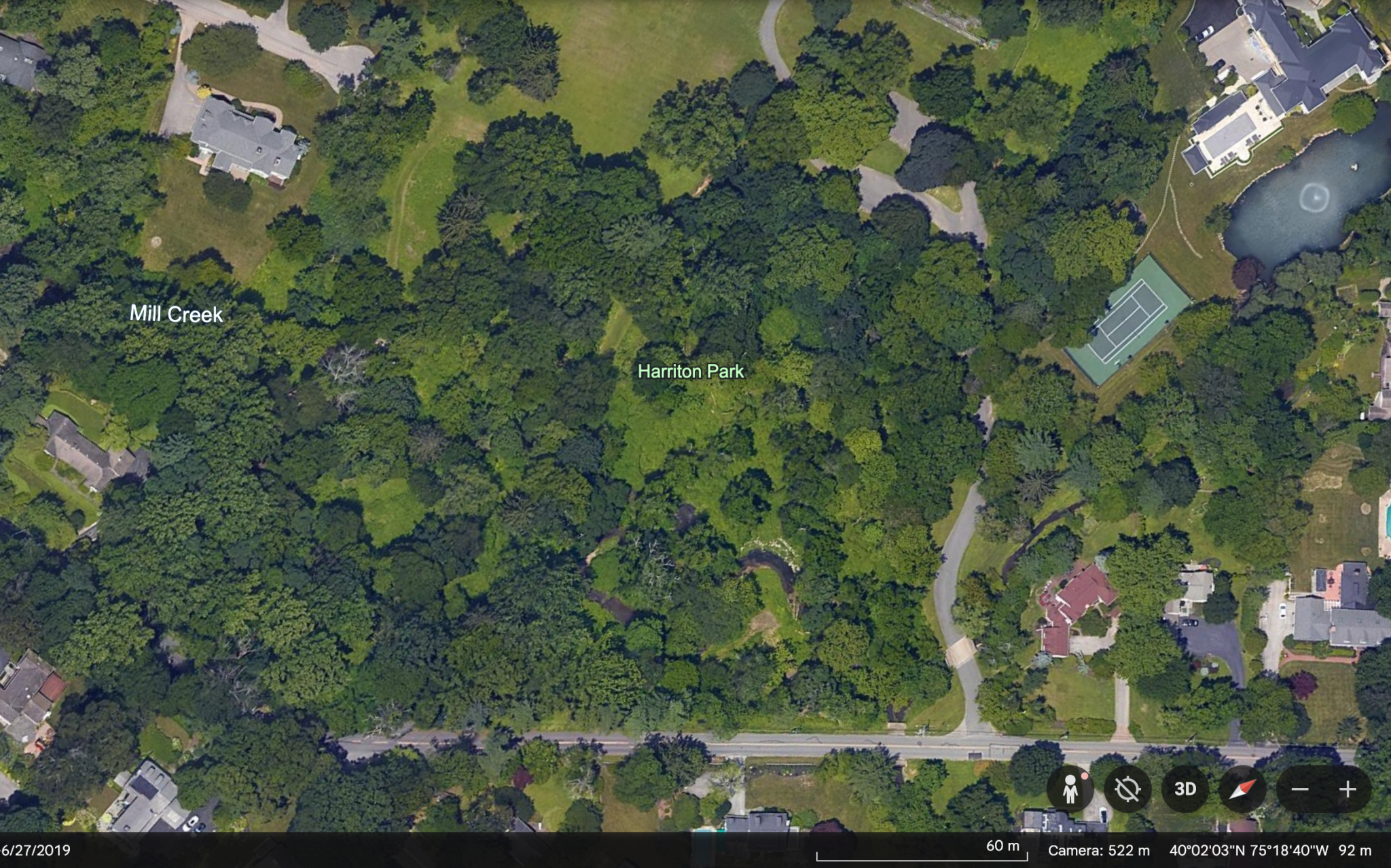
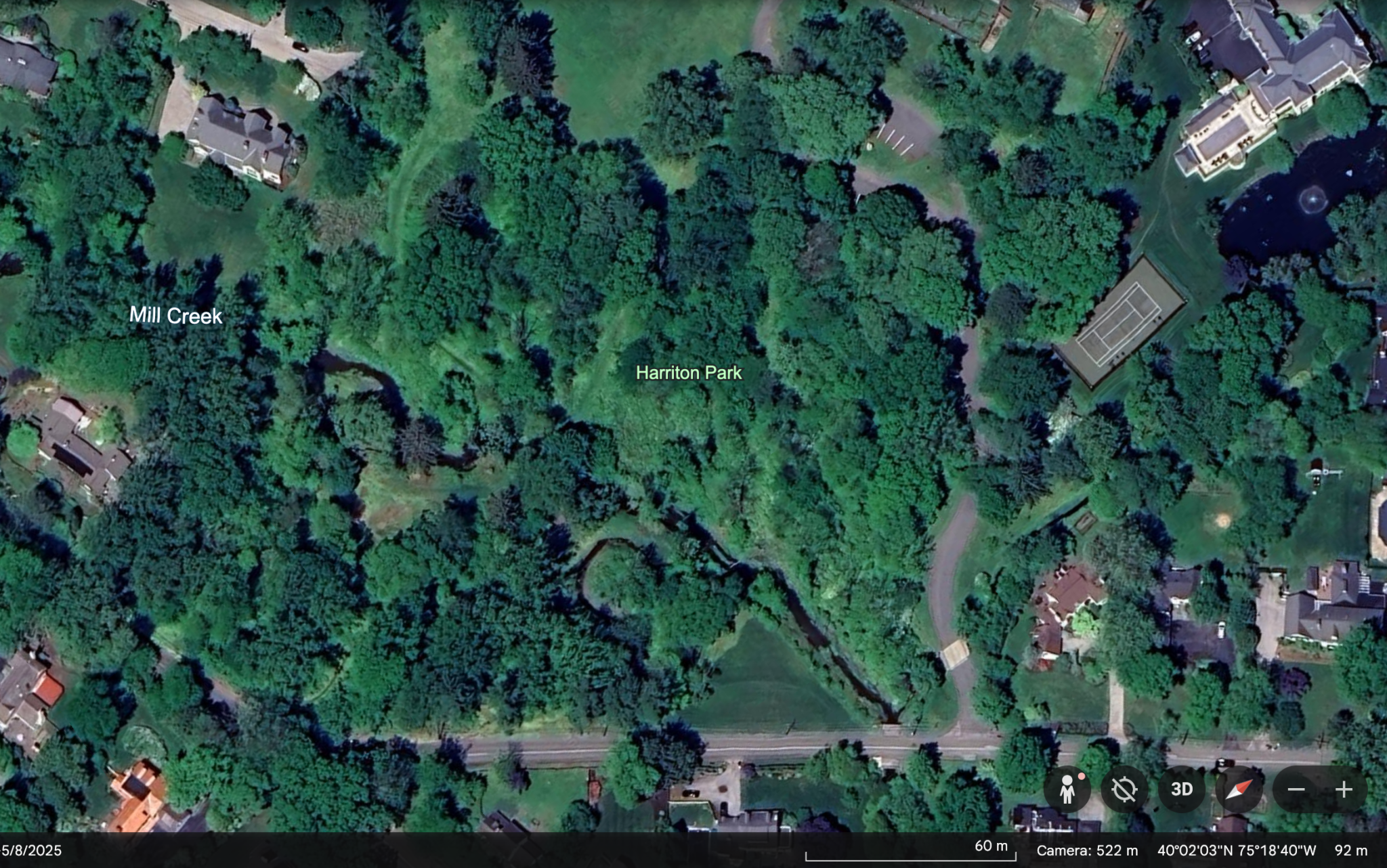
The Preserve has lost much of its tree canopy in recent years, creating openings for invasive plants. The tree loss was likely driven by emerald ash borer killing ash trees and exacerbated by heavy machinery driving through the space to alter the stream banks. If left unchecked, invasive vines like porcelain berry could take down the remaining trees. One of the main goals of the project is to restore the canopy with a diverse mix of native trees. New and existing trees will provide habitat for wildlife, protect soil from erosion, and shade the stream, creating better conditions for aquatic life. 

See the satellite images below to see how many trees were lost. Note how darker green patches of tree leaves turn to lighter green patches of invasives over time.

May 2016

June 2019

May 2025

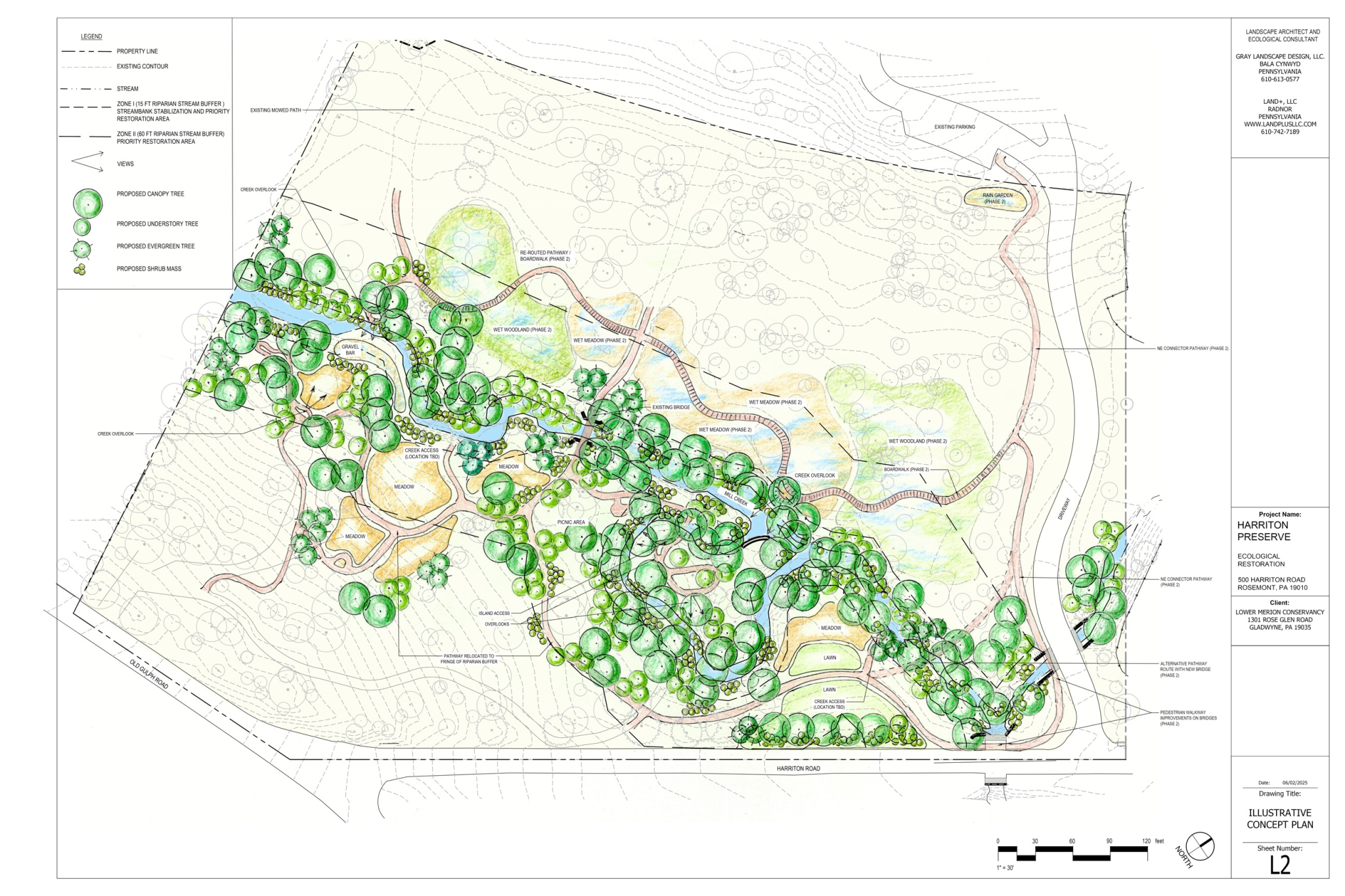
The plants we are putting in will help restore what was lost, creating ecological benefits at the Preserve and serving as an example for other streamside properties. We will share updates as the project progresses. Here is the concept plan from Gray Landscape Design, LLC:

Cynwyd Heritage Trail Wildlife Habitat Expansion

In 2020, the Conservancy received a grant from the National Fish and Wildlife Foundation to improve stormwater management, restore wildlife habitat, and improve recreational access on the Cynwyd Heritage Trail and along sections of Vine Creek. During heavy rain storms, water rips down sections of the Cynwyd Heritage Trail, forcing gravel, sediment and other pollutants to wash over the trail before flowing into the adjacent Vine Creek and the Schuylkill River. The rain water pouring onto the trail and into the creek comes from storm sewer pipes, which take on uphill impervious surfaces, including streets, roofs, driveways, parking lots, and shallow-rooted turf grass. Runoff along the Cynwyd Heritage Trail increases water velocity, exacerbates flooding and worsens erosion, sending more sediment downstream. Excess sediment cuts off light to important aquatic plants and smothers aquatic animals. Even small rain storms have an impact.

There are ways to mitigate stormwater runoff that do not involve underground piping, walls, holding tanks or culverts that dump unfiltered water into our streams. These green strategies naturally capture and filter stormwater, and if done correctly, are sustainable and greatly beneficial to the health of wildlife and people. Strategies include: planting trees to form deep root systems that absorb water, stabilize soil and shade streams; replacing mowed lawns with native meadows; diverting stormwater from its impervious source towards planted spaces; and increasing the width of riparian areas to slow and dissipate water during high stream flows.

Implementing these green strategies at a scale that can make an impact, restore and create vast areas of wildlife habitat, and produce measurable improvements in stormwater capture can be challenging. The Conservancy contracted with Gray Landscape Design, LLC to design and help implement a plan for achieving the goals of the grant. In consultation with Gray Design, the Friends of the Cynwyd Heritage Trail and Lower Merion Township, planting plans were developed for a portion of the trail. Duranti’s Landscaping implemented the plans in fall 2022.

Delmont Avenue Green Street

The Conservancy is working with the residents of Delmont Avenue in Ardmore to plant native plants, de-pave, establish rain gardens, redirect piped downspouts, and install flow through planters, all to slow down stormwater.

The efforts on Delmont Ave. are an expansion of the Stream Smart program. After the initial success of Stream Smart, the Stream Smart partners joined with other Delaware River Watershed Initiative organizations to create a more hands-on expansion of the program. The new proposal to install green stormwater projects on a residential scale was deemed worthy of a National Fish and Wildlife Foundation Cornerstone Grant. 

Properties have varying amounts of impervious coverage, gutter downspout orientations, available space for new plantings, and utility locations, so each project has been unique. The overarching goal – to slow down and clean as much stormwater as possible – remains the same.

Delmont Avenue was selected as the pilot block because of enthusiasm for the project on the street. The knowledge, energy, and passion of the neighbors has made the efforts more cohesive and, ultimately, more impactful. The Conservancy hopes that the Delmont Avenue Green Street can serve as a model for other streets in the future. See some of the completed work below. If nothing appears, view the Story Map here