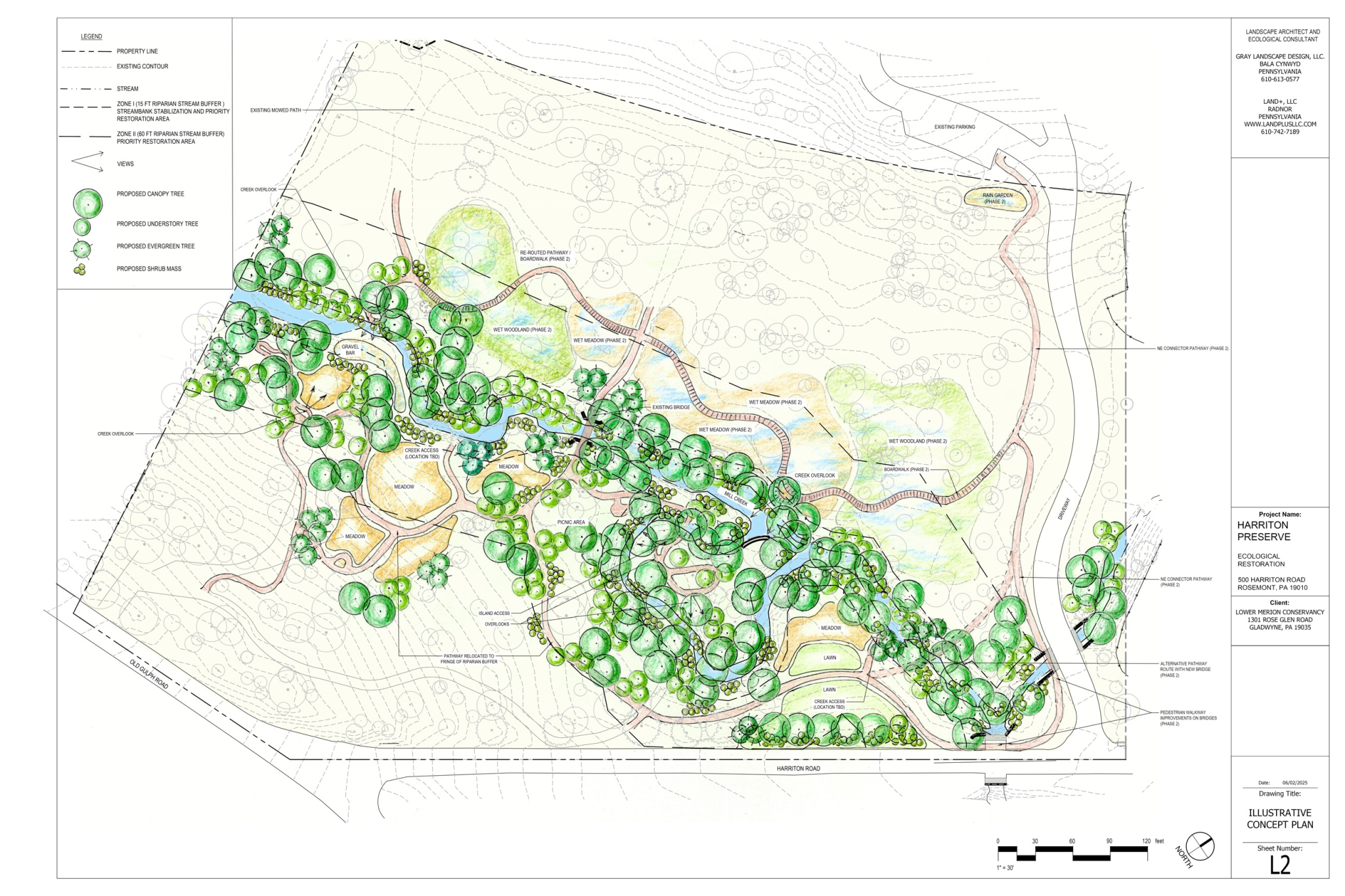
The Conservancy is working with the Friends of Harriton Preserve (FHP) and Lower Merion Township (LMT) to expand and restore habitat at Harriton Preserve. The project is funded by a Growing Greener Plus grant from the PA Department of Environmental Protection. Harriton Preserve is an 8.9-acre parcel within Harriton Park in Bryn Mawr. The Preserve contains woodlands and two streams, including a section of Mill Creek. The Harriton Association maintains the buildings, the upper section of Harriton Park, and the space along the driveway while LMT works with the FHP to maintain the 8.9-acre Preserve. Invasive plants like porcelain berry, multiflora rose, and Japanese knotweed occupy large, spreading sections of the Preserve. Most local pollinators cannot eat porcelain berry, multiflora rose, or Japanese knotweed, so the populations of pollinators – and other important organisms – at the Preserve are lower than they could be.
We are cutting the porcelain berry, Japanese knotweed, and multiflora rose plants growing near the stream near the stream for two growing seasons to counter their spread. Goats from Amazing Grazing ate some of thickest patches of invasives to start the process. The Growing Network has cut down other areas near the stream. They use a machine that can destroy tough plants while maintaining enough maneuverability to avoid native plants growing in the space. The Growing Network returned in September to knock the invasives back again.
The cuttings will weaken the plants, creating room to plant new native plants, like the successful efforts at the Cynwyd Heritage Trail. After two growing seasons of cutting, we will replant the area with native plants to restore the woodlands and expand the riparian buffer.
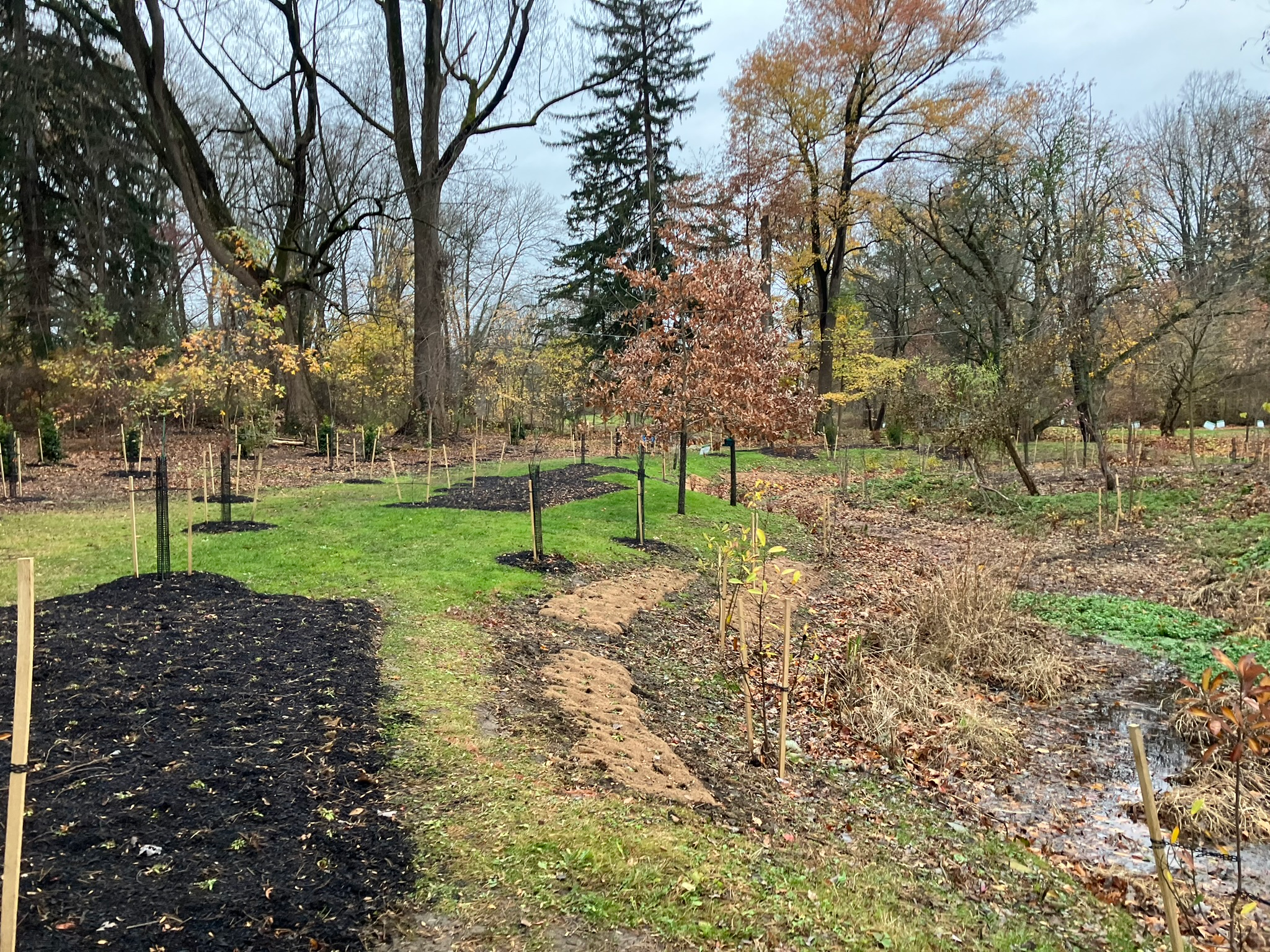
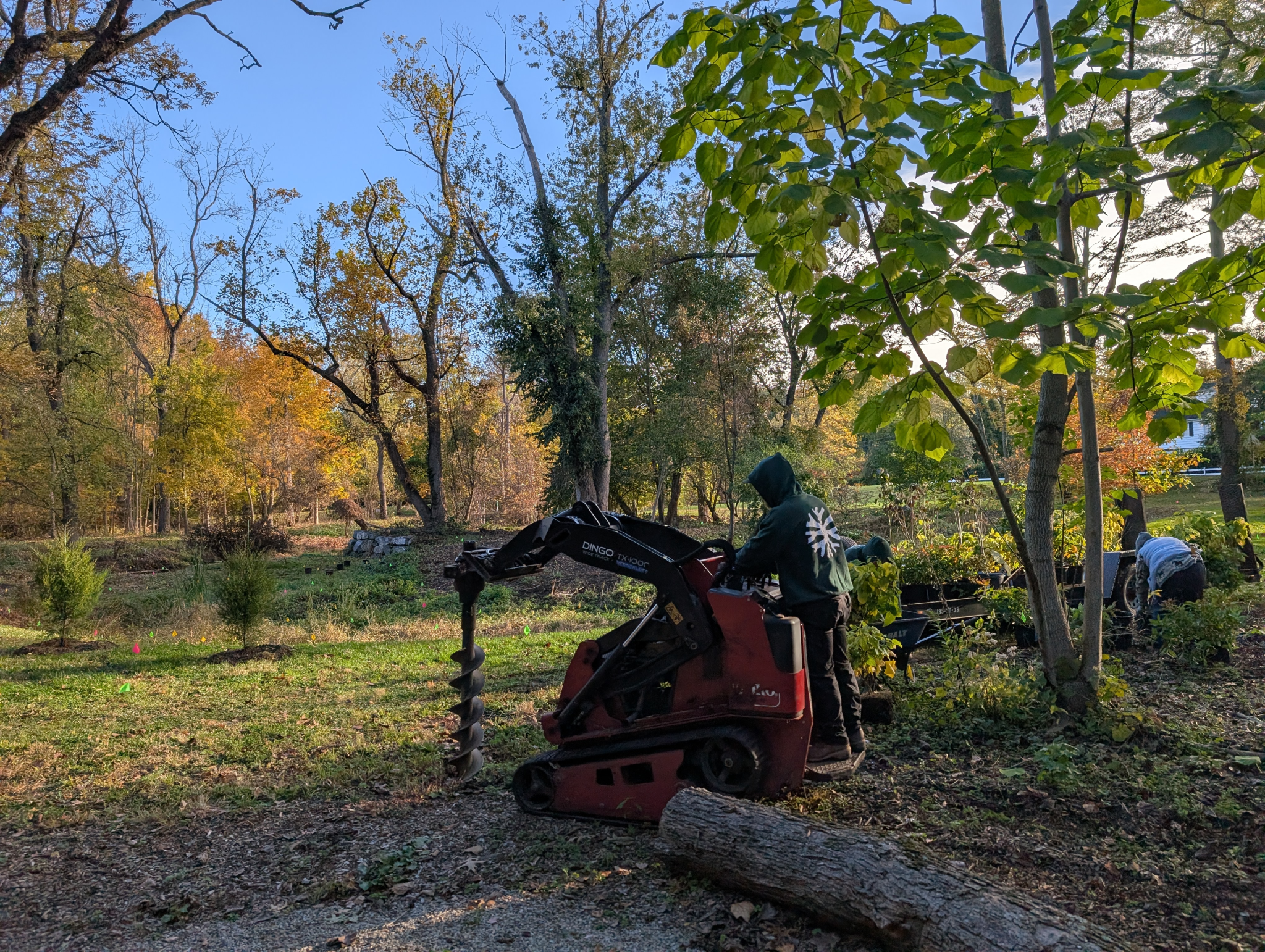
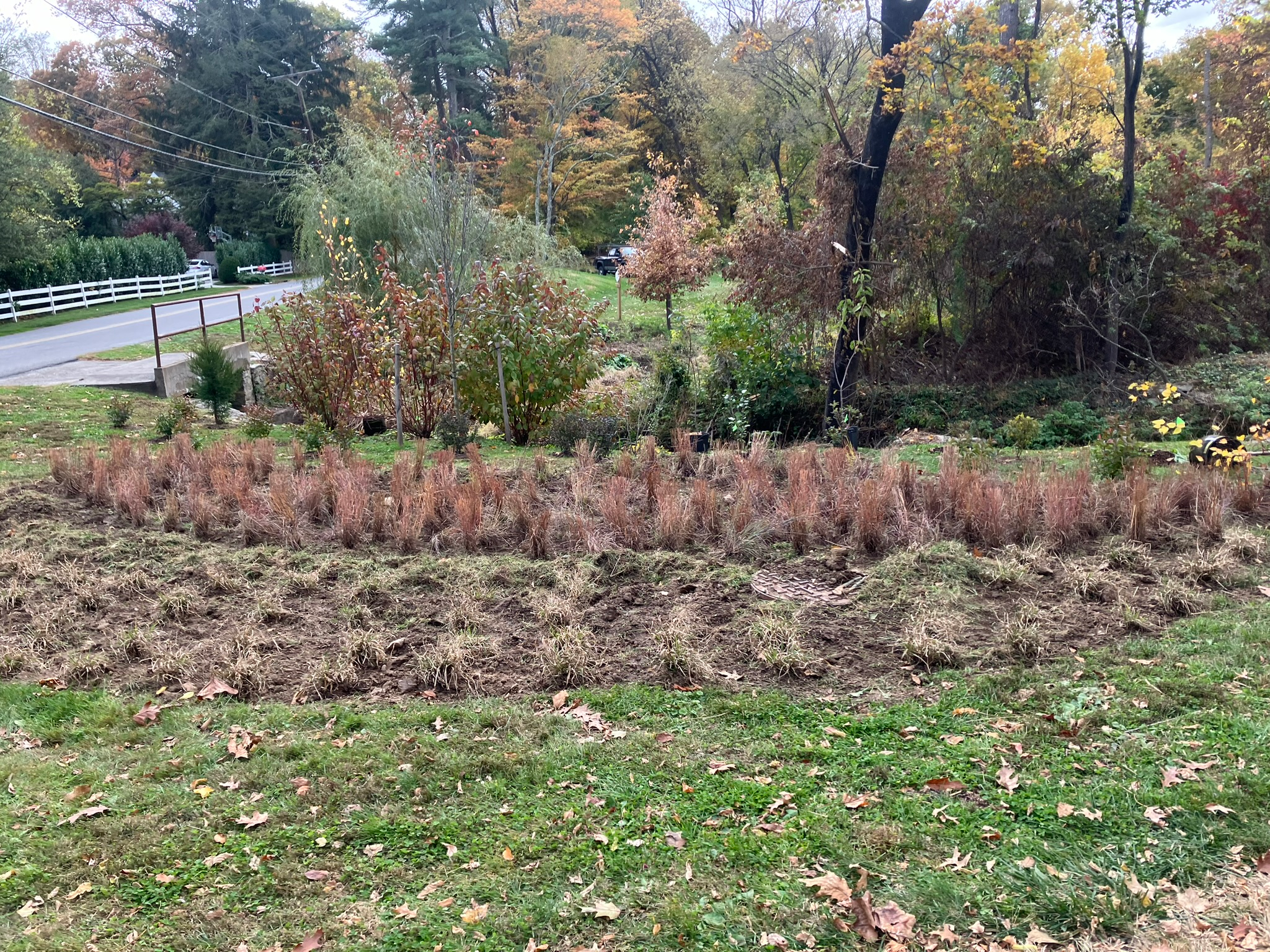
The south side of the stream, where invasive plants have been weakened already, was planted in October. Gray Landscape Design, LLC created the planting plan and guided the implementation. The plan emphasizes native trees and shrubs, to compete with and eventually shade out the invasive plants. There are a few clusters of hardy perennials intermixed, planted in coir matting to create an advantage.

Thank you to Jonathan DeLone from DeLone Design for providing drone videos and photos to help us track the project over time. The videos were taken while the goats were eating their way through the weeds. Click on the Delone Design logo to see visit his website and learn about his work.

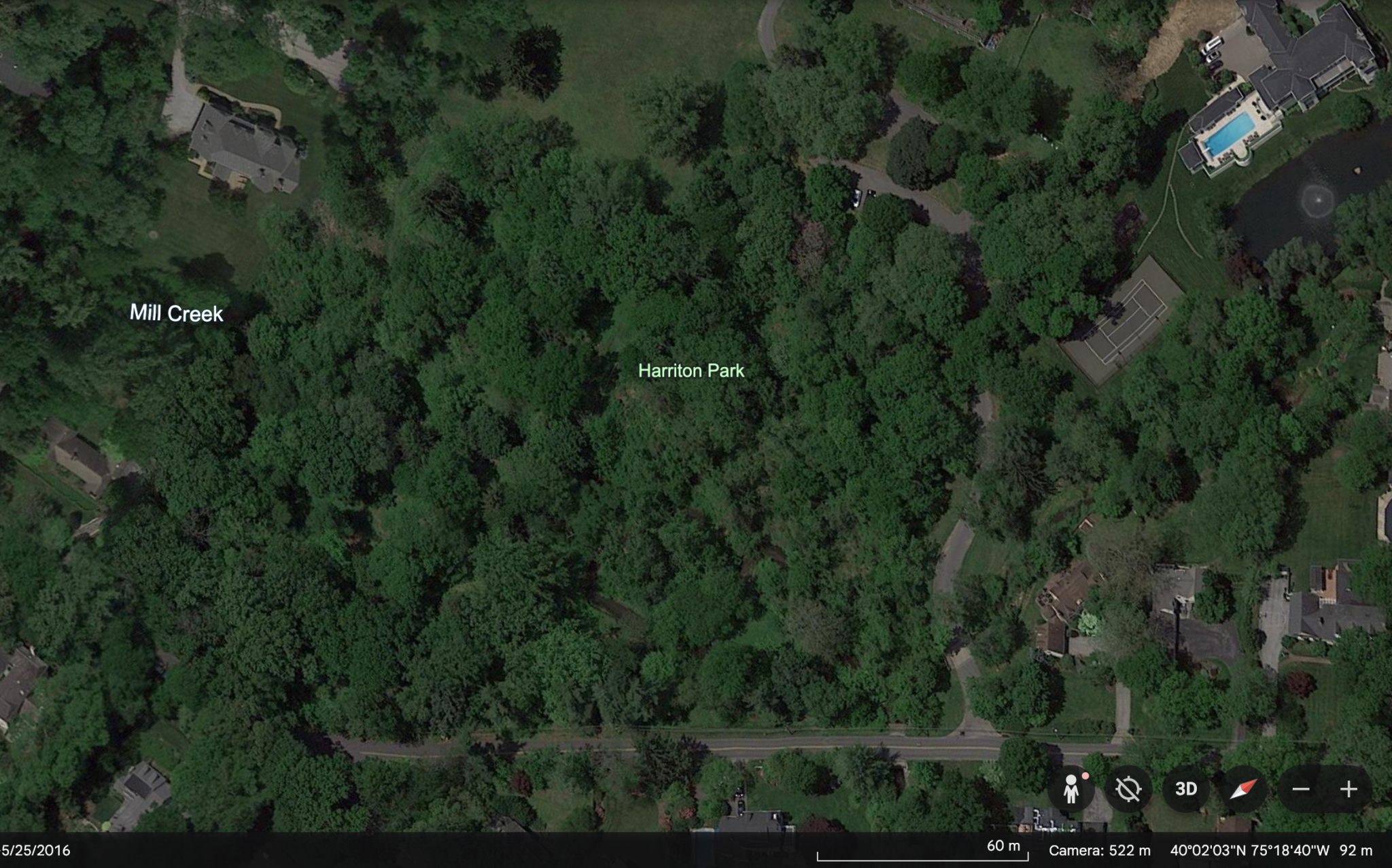 May 2016
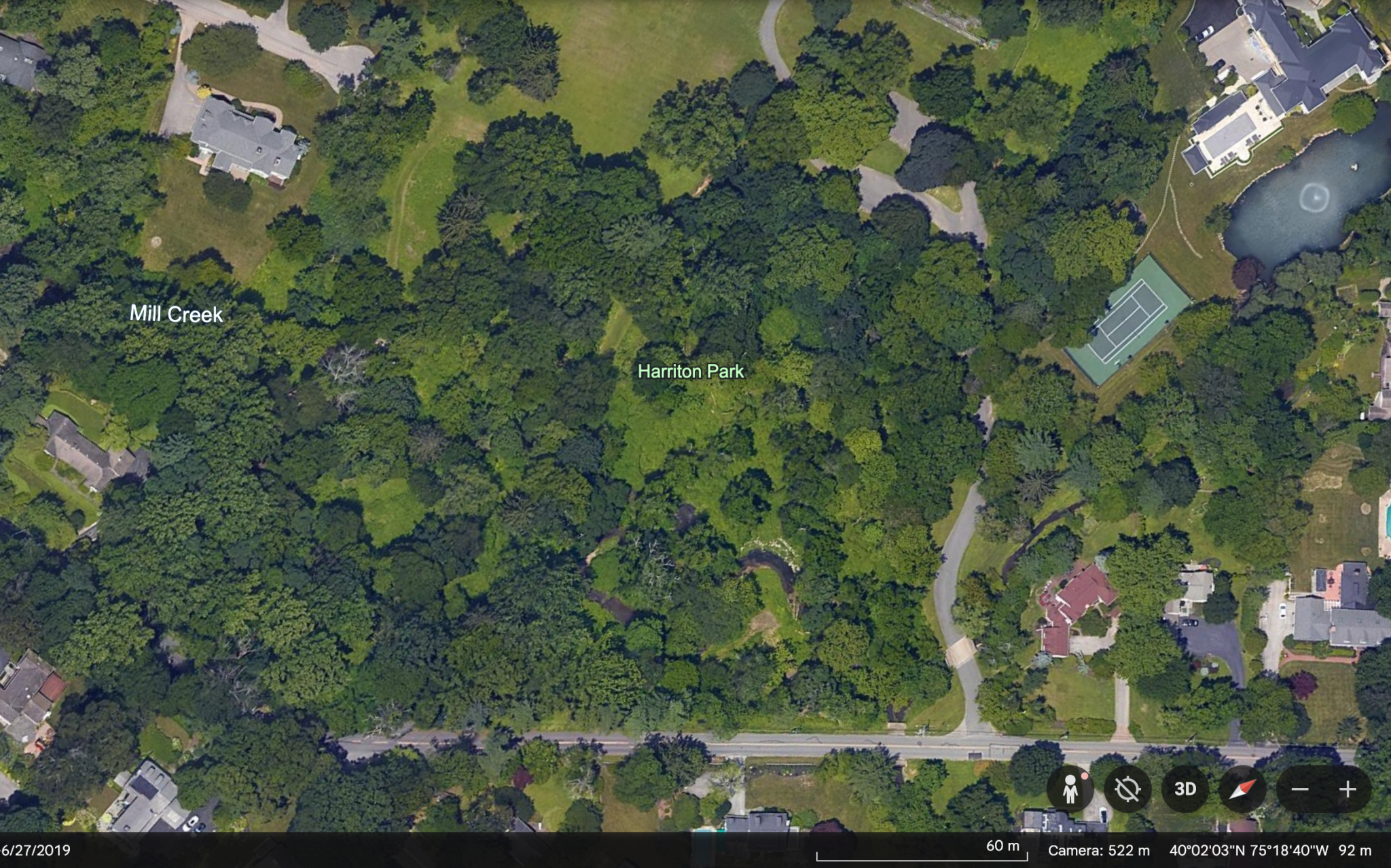 June 2019
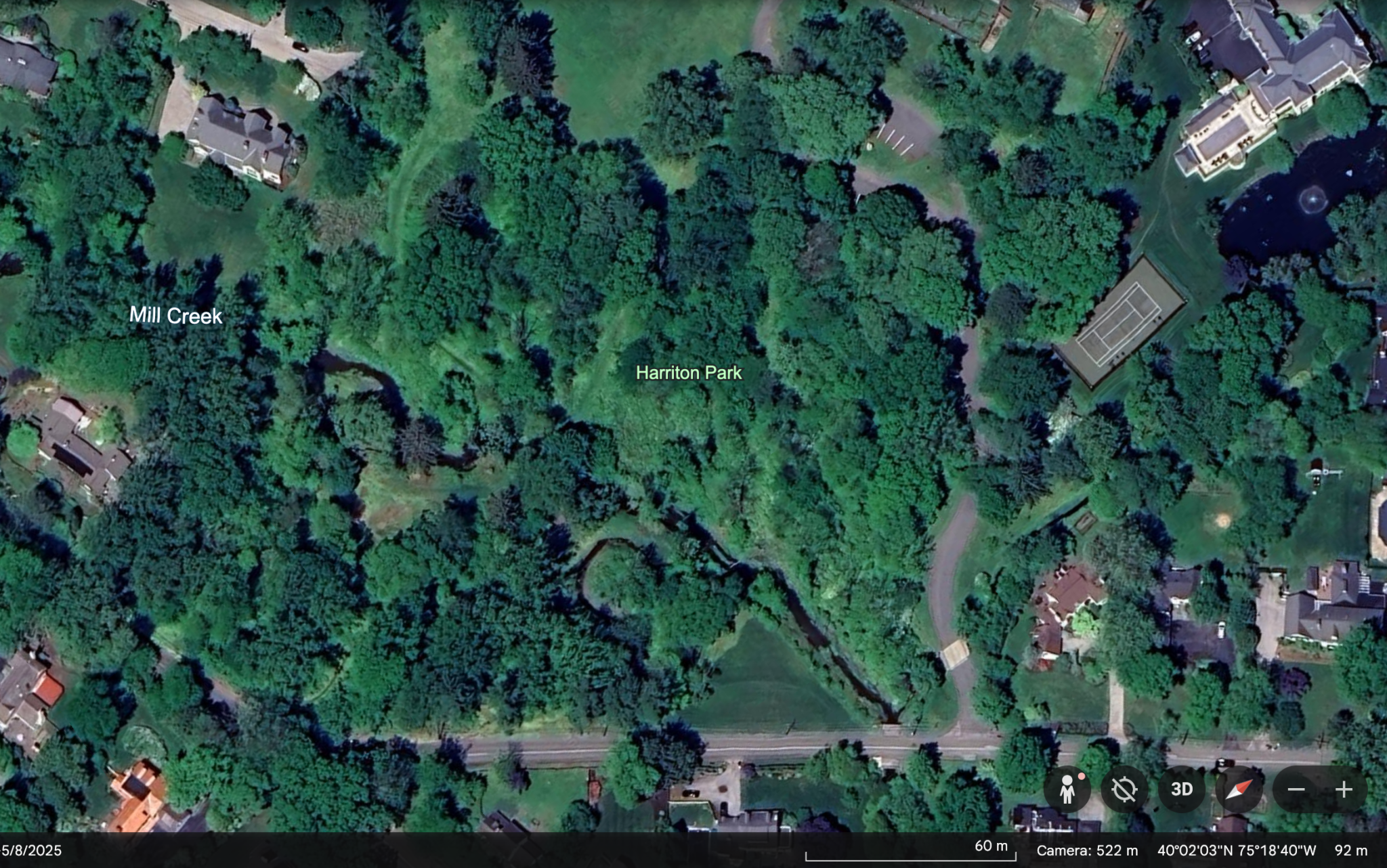 May 2025